

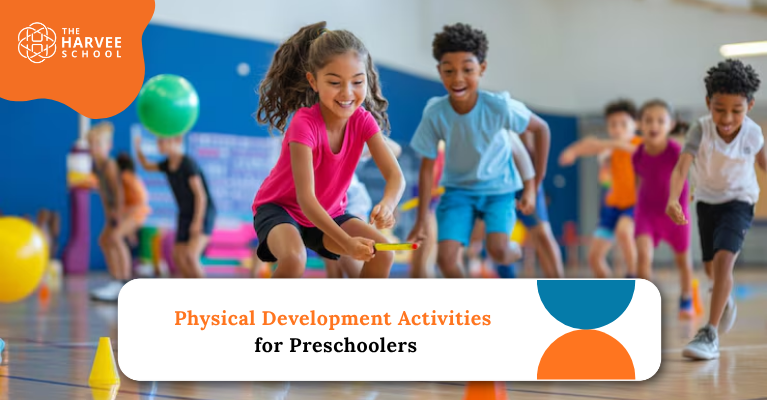
Physical Development Activities for Preschoolers

By The Harvee School
When children are young, they learn best through movement, play, and exploration. Physical development in early childhood is one of the most important parts of a child’s growth. It not only helps children become stronger and healthier but also builds confidence, coordination, and independence.
For preschoolers, every jump, run, and playful activity contributes to their overall development. In this blog, we will explore simple and effective activities, understand milestones, and see how parents and schools can support physical development in early childhood in a fun and meaningful way.
What is Physical Development in Early Childhood?
Physical development in early childhood refers to the growth of a child’s body, muscles, and ability to move and control their body. It includes both gross motor skills (big movements like running and jumping) and fine motor skills (small movements like holding a pencil or buttoning a shirt).
This stage usually covers children from ages 2 to 6 years, where rapid changes happen in strength, balance, and coordination.
Good physical and motor development ensures that children can perform everyday tasks easily and actively participate in learning activities.
Why is Physical Development Important?
Focusing on physical development in early childhood is essential because it supports many other areas of growth, such as:
- Brain development
- Social skills
- Emotional well-being
- Confidence and independence
Children who develop strong physical abilities are more likely to explore their surroundings and engage in new experiences. This is why physical development in early childhood should be encouraged both at home and in school.
Types of Physical Development
1. Gross Motor Skills
These involve large muscle movements such as:
- Running
- Jumping
- Climbing
- Throwing
Activities that support gross motor skills are a key part of physical development in early childhood.
2. Fine Motor Skills
These involve smaller muscle movements like:
- Holding crayons
- Cutting paper
- Picking up small objects
Both types together contribute to healthy physical and motor development.
Physical Development Milestones for Preschoolers
Understanding milestones helps parents track physical development in early childhood:
By Age 3:
- Can run and stop easily
- Climbs furniture
- Throws a ball
By Age 4:
- Hops on one foot
- Catches a ball
- Uses scissors with help
By Age 5:
- Skips and balances well
- Draws simple shapes
- Dresses independently
Each child grows at their own pace, but regular activities help improve physical development in early childhood effectively.
Best Physical Development Activities for Preschoolers
Here are some simple and fun activities that support physical development in early childhood:
1. Running and Racing Games
Running is one of the easiest ways to boost strength and stamina. You can organize small races or play tag games.
Benefits:
- Improves heart health
- Builds leg strength
- Enhances coordination
This is a great activity for improving physical development in early childhood.
2. Jumping Activities
Jumping on the floor, trampoline, or over small objects is exciting for kids.
Examples:
- Jumping like a frog
- Hopscotch
- Jumping over lines
Jumping helps in balance and strengthens muscles, contributing to physical and motor development.
3. Ball Play
Playing with balls helps children learn coordination.
Activities:
- Throwing and catching
- Kicking a ball
- Rolling a ball
Ball games are excellent for physical development in early childhood as they improve hand-eye coordination.
4. Climbing Activities
Climbing helps children build strength and confidence.
Examples:
- Climbing stairs
- Playground climbing frames
- Indoor soft climbing setups
These activities are essential for physical development in early childhood as they engage multiple muscle groups.
5. Dancing and Movement Games
Turn on music and let kids dance freely.
Benefits:
- Improves flexibility
- Builds rhythm
- Encourages self-expression
Dancing is a fun way to support physical development in early childhood while keeping children happy.
6. Drawing and Coloring
Fine motor skills are just as important.
Activities:
- Coloring books
- Drawing shapes
- Tracing lines
These activities improve grip strength and control, supporting physical and motor development.
7. Building with Blocks
Stacking blocks improves coordination and creativity.
Benefits:
- Develops hand control
- Enhances focus
- Builds problem-solving skills
It plays a key role in physical development in early childhood.
8. Outdoor Play
Outdoor play is one of the best ways to improve physical development in early childhood.
Examples:
- Playing in parks
- Running on grass
- Nature walks
Fresh air and space allow children to move freely and grow physically.
9. Obstacle Courses
Create simple obstacle courses at home or school.
Ideas:
- Crawl under tables
- Jump over cushions
- Balance on a line
This activity strengthens overall physical development in early childhood.
10. Simple Yoga for Kids
Basic yoga poses can improve flexibility and balance.
Examples:
- Tree pose
- Cat-cow stretch
- Butterfly pose
Yoga supports both mental calmness and physical development in early childhood.
How Harvee School Supports Physical Development
At Harvee School, we go beyond traditional learning methods. Our approach to physical development in early childhood includes:
- Structured play-based learning
- Safe and child-friendly infrastructure
- Experienced and caring educators
- Balanced daily routines
We ensure that every child gets equal opportunities to grow through movement and play, enhancing their physical and motor development.
Tips for Parents to Support Physical Development
Here are some simple ways parents can help:
- Encourage daily outdoor play
- Limit screen time
- Provide safe play equipment
- Join children in activities
- Maintain a healthy diet
Consistent support at home enhances physical development in early childhood and builds lifelong healthy habits.
Common Mistakes to Avoid
While supporting physical development in early childhood, avoid these mistakes:
- Forcing children into activities they don’t enjoy
- Too much screen time
- Lack of outdoor play
- Ignoring safety measures
Children should enjoy the process of movement and learning.
Final Thoughts
Physical development in early childhood is the foundation for a healthy and active life. Through simple activities like running, jumping, drawing, and playing, children develop strength, coordination, and confidence.
Both parents and schools must work together to create an environment where children can move freely, explore safely, and grow naturally. When children enjoy physical activities, they not only become physically strong but also emotionally and socially confident.
Choosing the right preschool makes a big difference. At Harvee School, we are committed to supporting every child’s journey of physical development in early childhood, helping them build a strong and confident future.