

How to Teach Kids Teamwork: 7 Simple Ways

By The Harvee School
Have you ever noticed how children enjoy playing with friends but sometimes struggle to share toys, take turns, or agree on a game? These everyday moments are great opportunities to teach them teamwork. Learning to work together helps children understand the importance of sharing, listening, and helping others.
Teamwork is a skill children can use in many parts of life, from classroom activities and group projects to playing games with friends. With simple activities and guidance from parents and teachers, children can learn to respect different ideas, solve problems together, and support one another.
So, how can you teach kids teamwork in a fun and easy way? Let’s explore some simple ways to help children learn to work together.
Why Is Teamwork Important for Kids?
Teamwork teaches children that they do not always have to do everything alone. When they work with others, they learn to respect different opinions, take turns, and help people who need support.
Here are some important benefits of teamwork for children:
- Improves communication: Children learn to share their thoughts and listen to what others have to say.
- Builds confidence: Working with friends helps children feel comfortable sharing ideas and trying new things.
- Teaches problem-solving: Children learn to find solutions together when they face a challenge.
- Develops patience: They understand that everyone has different ideas and may work at a different speed.
- Builds friendships: Helping and supporting others can create stronger relationships.
- Encourages responsibility: Children learn that every team member has a role to play.
These skills can help children at school, at home, and in their everyday lives.
7 Simple Ways to Teach Kids Teamwork
Children learn best when they can practise a skill instead of only hearing about it. Here are seven simple ways parents and teachers can help children understand teamwork.
1. Encourage Children to Play Team Games
Playing games is one of the easiest ways to teach teamwork. Games help children understand how to follow rules, take turns, and work towards a shared goal.
For example, children can play a ball-passing game where they need to pass the ball to every team member before scoring a point. They can also play relay races, group puzzles, or treasure hunts.
During these activities, encourage children to support one another instead of focusing only on winning. Explain that a good team is one where everyone gets a chance to participate.
2. Give Them Small Group Activities
Group activities give children a chance to share ideas and learn from one another. Teachers can divide students into small groups and give each group a simple task.
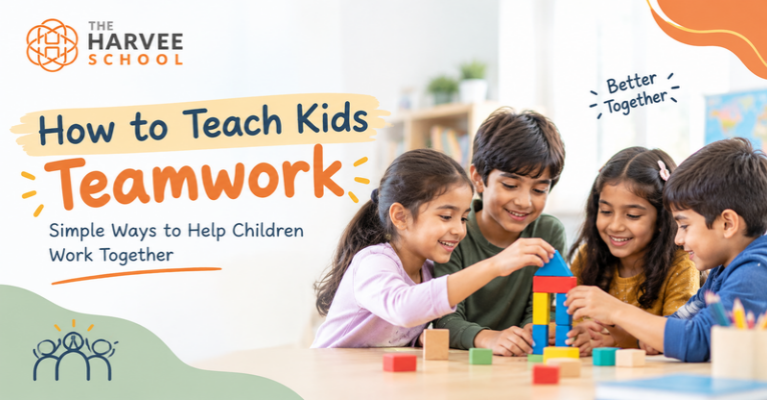
For example, ask a group of children to build a tower using paper cups or blocks. Each child can suggest an idea, collect materials, or help build the tower.
The aim is not to see which child is the smartest or fastest. It is to help children understand that working together can make a task easier and more enjoyable.
Parents can also try similar activities at home using building blocks, drawing materials, or simple craft items.
Also Read: 20 Easy Craft Ideas for Kids at School
3. Teach Children to Share and Take Turns
Sharing is an important part of teamwork. Young children may find it difficult to share their favourite toys or wait for their turn. This is normal, and they may need time and practice to learn.
Parents and teachers can encourage children to take turns during games, share art supplies, or work together with a common set of toys.
For example, if two children want to use the same toy, guide them to agree on how long each child can use it. Praise them when they wait patiently or share without arguing.
Instead of forcing children to share immediately, help them understand how sharing makes playtime fair and enjoyable for everyone.
4. Encourage Children to Listen to Others
Good teamwork is not just about speaking. It also means listening to what other people have to say.
During group activities, encourage children to let their friends finish speaking before sharing their own ideas. Teach them to ask simple questions such as, “What do you think?” or “Can you show us your idea?”
For example, when a group is deciding what to draw for a school project, every child should get a chance to suggest something. They can then discuss their ideas and choose how to complete the drawing together.
When children feel that their opinions matter, they are also more likely to respect the opinions of others.
5. Give Children Shared Responsibilities
Children can learn teamwork through simple daily tasks. At home, parents can ask siblings to arrange their toys, set the dining table, or organise their books together.
In school, teachers can assign small responsibilities such as distributing worksheets, arranging classroom materials, or keeping activity areas tidy.
Make sure each child has a clear role. One child can collect the materials, another can arrange them, and another can check whether everything is in place.
When children understand that every role is important, they learn to take responsibility and appreciate the efforts of others.
6. Teach Children How to Solve Disagreements
Children may disagree while playing or working in groups. One child may want to follow one idea, while another may prefer something different. These situations can become useful learning opportunities.
Instead of solving every disagreement for them, help children talk about the problem calmly. Encourage them to explain how they feel and listen to the other person’s point of view.
For example, if two children disagree about the rules of a game, ask them to suggest a fair solution that both can accept.
Children should also learn that making mistakes is part of learning. When they understand how to handle disagreements respectfully, they become better at working with others.
7. Appreciate Team Effort, Not Just Results
Children often feel happy when they win a game or finish a task successfully. However, teamwork is not only about getting the best result. The effort made by every team member is equally important.
Parents and teachers should appreciate children when they help a friend, share materials, listen carefully, or encourage someone who is struggling.
Instead of saying only, “You won the game,” try saying, “You all worked together and helped each other.”
This helps children understand that cooperation, kindness, and effort are just as important as winning.
How Can Teachers Encourage Teamwork in the Classroom?
Schools provide many opportunities for children to practise teamwork. Teachers can include group discussions, classroom projects, team-building games, and creative activities in everyday learning.
For example, students can work together to create a poster, complete a science activity, or prepare a short presentation. Teachers can assign different roles so that every student gets an opportunity to contribute.
It is also important to create a classroom environment where children feel safe sharing their ideas. Teachers should encourage students to respect different opinions and avoid making fun of others’ mistakes.
When children regularly participate in group activities, they begin to understand that every team member has something valuable to contribute.
What Should Parents Avoid When Teaching Teamwork?
While teaching teamwork, parents should remember that children develop social skills at different speeds. Some children may enjoy group activities, while others may need more time to feel comfortable.
Avoid comparing children with their siblings or friends. Statements such as “Why can’t you work like your friend?” may make a child feel discouraged.
Parents should also avoid focusing only on winning or completing a task quickly. Give children enough time to practise, make mistakes, and learn from their experiences.
Most importantly, show teamwork through your own actions. When children see adults sharing responsibilities, listening patiently, and helping others, they learn to follow the same behaviour.
Conclusion
Teaching kids teamwork does not require complicated lessons or special equipment. Simple games, group activities, shared responsibilities, and everyday conversations can help children learn how to work well with others.
Parents and teachers can support this learning by encouraging children to share, listen, solve problems, and appreciate everyone’s efforts. With regular practice, children can become more confident, responsible, and supportive of their friends.
When children learn the value of teamwork at an early age, they gain skills that can help them in school and throughout their lives.