

How to Build Good Habits in Kids : 25 Good Habits for Kids

By The Harvee School
Good habits can make a big difference in a child’s life. Simple things like waking up on time, brushing their teeth, eating healthy food, reading, exercising and keeping their things organised can help children become more responsible and confident.
But building good habits does not happen in one day. Children need time, support and regular practice. Parents and teachers can make this process easier by creating a positive environment and showing children how small daily actions can lead to better health and learning.
If you are wondering how to build good habits in children and students, this guide shares simple and practical ideas that can be followed at home and school. These good habits for kids can also help them become more independent as they grow.
What Are Good Habits?
Good habits are healthy and positive actions that we repeat regularly. When children practise something again and again, it can slowly become part of their daily routine.
Some examples of good habits for kids include:
- Brushing teeth twice a day
- Washing hands before eating
- Eating fruits and vegetables
- Drinking enough water
- Sleeping on time
- Exercising or playing every day
- Reading regularly
- Completing homework on time
- Keeping their room and school bag organised
- Limiting screen time
- Speaking politely to others
These habits may look small, but they can support a child’s physical health, emotional well-being, learning and independence.
Why Is It Important to Build Good Habits Early?
Childhood is an important time for learning routines. The habits children develop when they are young can influence their lifestyle as they grow.
Healthy habits can help children:
- Stay physically active
- Maintain better personal hygiene
- Improve concentration
- Develop self-discipline
- Become more independent
- Manage their time better
- Make healthier food choices
- Sleep better
- Build confidence
- Develop a positive attitude towards learning
For students, a good daily routine can also make school life easier. When children know when to study, play, eat and sleep, they may find it easier to manage their day. These are some of the most useful good habits for students to practise every day.
How to Build Good Habits in Children
Building habits should not feel like a punishment. Children are more likely to follow a routine when it is simple, enjoyable and consistent.
Here are some easy ways to help children develop good habits.
1. Start With One Habit at a Time
Trying to change everything at once can be difficult for children. Instead, start with one simple habit.
For example, if a child is not following a regular bedtime, begin by setting a fixed sleeping time. Once this becomes comfortable, another habit can be introduced.
Small changes are easier to maintain than big changes.
2. Create a Simple Daily Routine
Children benefit from knowing what comes next. A simple routine can help them understand how to use their time.
A daily routine may include:
Morning: Wake up, brush teeth, take a bath, eat breakfast and get ready for school.
After school: Have a healthy snack, relax, complete homework and play.
Evening: Spend time with family, read or complete other activities.
Night: Have dinner, prepare the school bag, brush teeth and go to bed.
The routine does not need to be perfect. The goal is to make important activities regular.
Parents can also create a 10 good habits chart with simple daily activities. Children can tick each habit after completing it. A 10 good habits chart can make the routine more interesting and help children see their progress.
3. Be a Good Role Model
Children learn a lot by watching adults. If parents follow healthy habits, children are more likely to copy them.
For example, parents can:
- Eat healthy meals with their children
- Keep their phones away during family meals
- Read books
- Exercise regularly
- Follow a proper sleep schedule
- Keep their surroundings clean
Instead of only telling children what to do, show them how to do it.
4. Make Healthy Eating a Daily Habit
Food habits are an important part of a child’s health. Children need a balanced diet to support their growth, energy and learning.
Parents can encourage healthy eating by including:
- Fresh fruits
- Vegetables
- Whole grains
- Milk or other suitable dairy foods
- Eggs, pulses or other protein-rich foods
- Plenty of water
Try to make healthy food interesting and enjoyable. Children may be more willing to try new foods when they are involved in choosing or preparing them.
It is also helpful to avoid making unhealthy foods completely forbidden. Instead, teach children about balance and better food choices.
5. Encourage Daily Physical Activity
Children need movement every day. Physical activity does not always have to mean organised sports.
Children can stay active through:
- Walking
- Cycling
- Running
- Dancing
- Swimming
- Outdoor games
- Playing with friends
- Simple exercises
Encouraging children to spend some time outdoors can also give them a break from studying and screens.
6. Develop Good Study Habits
Good study habits can help students become more organised and confident.
Encourage children to:
- Study at a regular time
- Keep their study area clean
- Complete important work first
- Take short breaks
- Keep school materials organised
- Review lessons regularly
- Ask questions when they do not understand something
These simple routines are especially useful good habits for students because they can help children manage schoolwork without feeling overwhelmed.
Studying for many hours without breaks is not always helpful. Children need enough rest and movement to stay focused.
7. Teach Children About Personal Hygiene
Personal hygiene is one of the most important healthy habits for children.
Teach them to:
- Brush their teeth twice a day
- Wash their hands regularly
- Take a bath regularly
- Keep their nails clean
- Wear clean clothes
- Cover their mouth when coughing or sneezing
- Keep their school and personal items clean
These simple habits can help children understand the importance of taking care of their bodies.
8. Set Healthy Screen-Time Boundaries
Phones, tablets, computers and television are now part of everyday life. Instead of completely avoiding screens, children can be taught to use them responsibly.
Parents can create simple rules such as:
- No phones during meals
- No unnecessary screen use during study time
- Avoid screens close to bedtime
- Encourage outdoor play and hobbies
- Take regular breaks from screens
The right balance between technology, learning, physical activity and family time is important.
9. Teach Children to Keep Things Organised
Organisation is a useful habit for both children and students.
Start with small responsibilities. Ask children to:
- Put toys away after playing
- Keep books in their proper place
- Pack their school bag
- Arrange their study table
- Keep clothes ready for the next day
These small tasks can teach responsibility and independence.
10. Praise Effort, Not Just Results
Children need encouragement while learning new habits. If they make a mistake, avoid making them feel bad.
Instead of saying, “You never follow your routine,” try saying, “You did well today. Let’s try to follow it again tomorrow.”
Praise can motivate children to continue practising.
Remember that the goal is not perfection. The goal is progress.
5 Good Habits for Kids to Start Today
Parents who want to begin with something simple can start with these 5 good habits for kids:
- Brush their teeth regularly – Teach children the importance of daily oral hygiene.
- Drink enough water – Encourage children to choose water throughout the day.
- Play or exercise every day – Make physical activity a fun part of their routine.
- Keep their things organised – Encourage them to put toys, books and school items back in place.
- Sleep on time – A regular bedtime can help children get enough rest.
These 5 good habits for kids are simple enough to practise at home and can be slowly added to a child’s daily routine.
How Long Does It Take to Build a Good Habit?
There is no fixed number of days that works for every child. Some habits may become comfortable quickly, while others may take longer.
The most important things are consistency and patience.
For example, if a child is learning to brush their teeth without being reminded, parents may need to remind them regularly at first. Over time, the child may begin doing it independently.
Do not worry if there are occasional missed days. Simply return to the routine and continue.
How Parents and Teachers Can Help
Parents and teachers play an important role in helping children develop healthy habits.
Parents can create routines at home, provide healthy food choices and encourage physical activity. Teachers can help students develop good study habits, cleanliness, organisation and respectful behaviour at school.
Working together can make healthy habits easier for children to understand and follow.
Schools can also support children by encouraging activities such as sports, reading, creative learning, teamwork and personal responsibility. A positive learning environment can help children understand that healthy habits are part of everyday life.
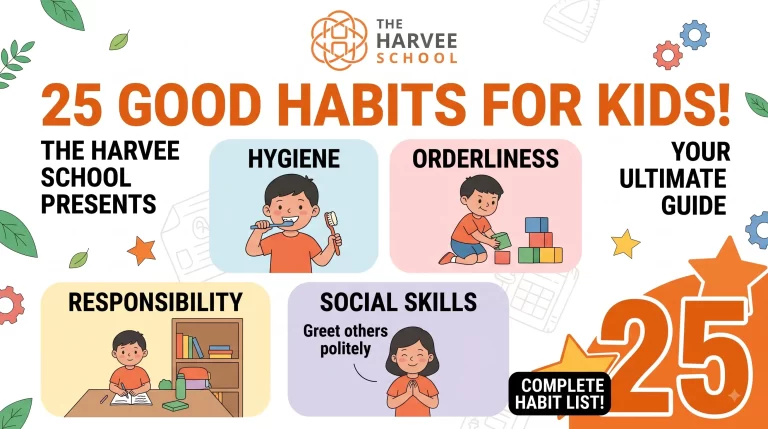
25 Good Habits for Kids
Here is a simple list of 25 good habits for kids that parents and teachers can teach step by step, along with a short explanation for each habit to help children understand why it is important:
Health and Hygiene Habits
- Brush teeth twice a day – This helps remove germs and keeps teeth strong and healthy, preventing cavities and bad breath.
- Wash hands before eating – Cleaning hands removes dirt and germs so children do not fall sick while eating.
- Take a bath daily – Bathing keeps the body clean, fresh, and free from sweat and bacteria.
- Wear clean clothes – Clean clothes help maintain hygiene and make children feel comfortable and confident.
- Trim nails regularly – Short nails prevent dirt and germs from collecting and reduce the risk of infections.
- Drink enough water – Drinking water keeps the body hydrated, improves digestion, and helps children stay active.
- Eat fruits and vegetables daily – These foods provide vitamins and minerals that help children grow strong and healthy.
Daily Routine Habits
- Wake up early – Waking up early gives children more time to prepare for the day calmly and stay active.
- Sleep on time – Proper sleep helps the body and brain rest, improving focus and energy for the next day.
- Follow a daily routine – A routine helps children stay organized and complete tasks on time without stress.
- Get ready for school on time – Being on time builds discipline and helps avoid rushing or missing school activities.
- Keep a fixed study time – Studying at the same time daily improves concentration and makes learning easier.
Study and Learning Habits
- Complete homework on time – Finishing homework regularly helps children understand lessons better and stay prepared.
- Read books daily – Reading improves vocabulary, imagination, and overall knowledge.
- Ask questions when confused – Asking questions helps clear doubts and improves understanding of topics.
- Keep study area clean – A clean space helps children focus better and find things easily while studying.
- Revise lessons regularly – Revision helps children remember what they have learned for a longer time.
Behaviour and Manners
- Speak politely – Using kind and respectful words helps build good relationships with others.
- Respect elders and teachers – Respecting others creates a positive and caring environment at home and school.
- Share with others – Sharing teaches kindness and helps children make friends easily.
- Say “please” and “thank you” – These polite words show good manners and respect in daily communication.
- Help family members – Helping at home teaches responsibility and teamwork.
Responsibility and Discipline
- Keep toys and books in place – Organizing belongings helps children learn discipline and keeps things easy to find.
- Pack school bag daily – Packing the bag regularly ensures children are prepared for school without forgetting anything.
- Limit screen time – Reducing screen time helps protect eyes, improves focus, and encourages outdoor play.
These 25 good habits for kids help children grow into responsible, healthy, and well-behaved individuals while building strong life skills for the future.
Simple Good Habits Checklist for Children
A simple checklist can make daily habits more enjoyable. Parents can turn this list into a 10 good habits chart for children to use at home or school.
☐ Wake up on time
☐ Brush their teeth twice a day
☐ Eat a healthy breakfast
☐ Drink enough water
☐ Wash their hands before meals
☐ Spend time playing or exercising
☐ Complete homework
☐ Read for some time
☐ Keep their room and study area clean
☐ Limit unnecessary screen time
☐ Prepare their school bag
☐ Sleep on time
Children can use the 10 good habits chart to mark their progress each day. Parents can also encourage them by celebrating their effort instead of expecting them to follow everything perfectly.
Final Thoughts
Learning how to build good habits is not about making children follow a strict schedule every day. It is about teaching them simple actions that can improve their health, learning and daily life.
Start small. Choose one or two healthy habits, practise them regularly and give children plenty of encouragement. With patience and support, these small actions can slowly become part of their everyday routine.
The good habits for kids that children learn today can support them as they grow. At the same time, good habits for students can help them manage school, learning and personal responsibilities more confidently.
The most important thing is to make healthy habits simple, positive and enjoyable. When children understand why a habit is important and see adults following it too, they are more likely to continue it as they grow.