

How Team Building Activities Help Students Learn and Grow at The Harvee School

By The Harvee School
Children learn in many different ways, and some of the most valuable lessons happen when they work and interact with others. Classroom learning builds academic knowledge, while activities outside traditional lessons can help children develop communication, confidence, cooperation, and problem-solving skills.
Team building activities for students provide opportunities to learn these skills through participation and shared experiences. Whether it is a classroom challenge, a group project, a sports activity, or a simple game, working towards a common goal can teach children how to listen, contribute, and support one another.
At The Harvee School, opportunities for collaboration and participation can complement classroom learning and help children develop skills that are useful throughout their school years and beyond.
What Are Team Building Activities?
Team building activities are group activities where children work together to complete a task, solve a challenge, or achieve a shared objective. They can take many forms depending on the age and interests of the students.
For younger children, activities may involve simple games, building tasks, puzzles, or creative exercises. Older students can participate in group projects, problem-solving challenges, sports, competitions, and activities that require planning and decision-making.
The aim is not always to identify a winner. The experience of working together is often the most valuable part. Children learn how to communicate their ideas, listen to others, divide responsibilities, and contribute to a common goal.
How Team Building Activities Support Student Development
School is an important environment for children to develop social and interpersonal skills. Regular opportunities to work with classmates can help them become more comfortable communicating and cooperating with others.
Through team building activities, students can learn to approach challenges together rather than trying to solve every problem independently. They may discover that different people bring different strengths to a group.
One child may be good at explaining an idea, another may be creative, while someone else may be good at organising the task. Learning how to bring these strengths together is an important part of growing as a learner.
Developing Communication and Listening Skills
Good teamwork begins with good communication.
During group activities, children need to explain their ideas clearly and listen to what their teammates have to say. They may need to ask questions, discuss different approaches, or agree on how a task should be completed.
Team building games can make these communication skills easier to practise because children are learning while actively participating. Games that involve giving instructions, solving clues, or completing a challenge can encourage students to speak, listen, and respond to one another.
Over time, these experiences can help children become more comfortable expressing themselves and understanding different viewpoints.
Encouraging Cooperation and Responsibility
Working as part of a team means understanding that every person has a role to play.
Some team building activities for students involve dividing a larger task into smaller responsibilities. This can help children understand the importance of completing their part while also supporting their teammates.
For example, a group project may require one student to gather information, another to organise the ideas, and another to present the final result. When everyone contributes, students can see how individual effort supports a shared outcome.
These experiences can encourage children to become more responsible and dependable members of a group.
Fun Team Building Activities That Make Learning Engaging
Learning does not always need to happen at a desk. Children can develop important skills while moving, creating, exploring, and playing.
Fun team building activities can include treasure hunts, group puzzles, relay challenges, building activities, storytelling games, creative competitions, and outdoor tasks. The right activity depends on the children’s age, interests, and learning needs.
When an activity is enjoyable, students are often more willing to participate and interact with their peers. This creates a positive environment where children can practise teamwork without feeling that they are being formally tested.
At The Harvee School, activities can complement classroom learning by giving students opportunities to learn through participation and experience.
Building Confidence Through Teamwork
Not every child is naturally comfortable speaking in front of a group. Some may prefer to observe before participating, while others may quickly take the lead.
Group activities can provide opportunities for different types of learners to participate at their own pace. A child who may hesitate to speak during a large classroom discussion might feel more comfortable sharing an idea within a small group.
Completing a challenge together can also give children a sense of achievement. These small successes can gradually encourage them to take part in new activities and approach unfamiliar situations with greater confidence.
Developing Problem-Solving Skills
Some of the best team building activities involve challenges that cannot be completed by simply following one set of instructions.
Students may need to find a solution, make a decision, test an idea, or change their approach when something does not work. Working with teammates allows them to discuss possibilities and learn from one another.
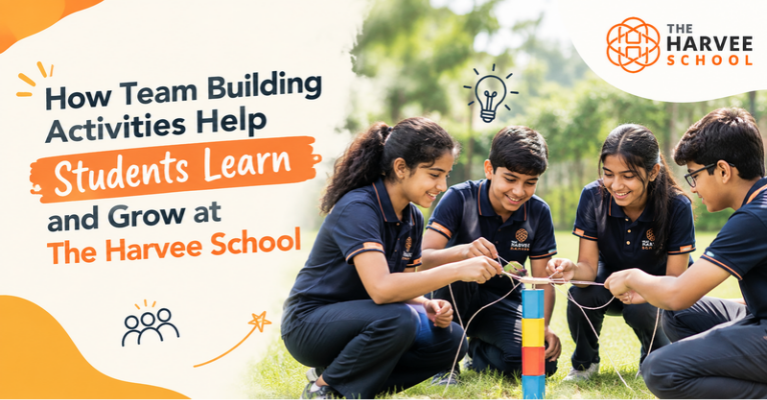
For example, a group might be asked to construct something using a limited number of materials. Students have to decide what they want to create, plan how to build it, and work together to make adjustments.
Such activities can encourage creative thinking and show children that mistakes can be part of the learning process.
Teaching Leadership and Collaboration
Leadership can begin with simple actions. A student might volunteer to organise a task, explain an idea to classmates, help a teammate, or encourage others to participate.
Different team building games and group challenges can give students opportunities to take on different roles. One activity may allow a child to lead, while another may require them to listen and follow someone else’s direction.
Experiencing both roles can help children understand that effective teamwork is about cooperation rather than always being the person in charge.
Learning to Respect Different Ideas
Children may not always agree with their classmates, and that is a natural part of working in groups.
Team activities can teach students how to disagree respectfully, consider another person’s point of view, and find a solution that works for the group.
This can be particularly useful as children grow older and encounter people with different opinions, experiences, and approaches.
By learning to value different contributions, students can become more open to collaboration and better prepared to work with a wide range of people.
Team Building Beyond the Classroom
Some of the best team building activities can take place outside regular classroom lessons. Sports, school clubs, cultural events, competitions, performances, and group projects all provide opportunities for students to work towards shared goals.
These experiences can teach children how to manage responsibilities, support teammates, follow rules, and handle both success and disappointment.
They also give students opportunities to discover interests and abilities that may not always be visible during academic lessons.
The Harvee School’s Approach to Learning
The Harvee School aims to provide children with learning experiences that go beyond academic knowledge. Opportunities for collaboration, participation, creativity, and communication can help students develop skills alongside their classroom education.
For parents exploring the best Cambridge schools in Coimbatore, the learning environment is an important consideration. A school should provide children with opportunities to develop academically while also encouraging them to become confident, responsible, and engaged learners.
Through classroom activities, projects, clubs, events, and other learning experiences, students at The Harvee School can have opportunities to interact with their peers and learn from shared experiences.
Why Teamwork Matters for the Future
The ability to work with others is useful at every stage of life. Students will eventually encounter group projects in higher education, collaborative workplaces, community activities, and many other situations where cooperation is important.
The habits children develop through team building activities can therefore continue to support them as they grow. Learning to communicate, listen, solve problems, take responsibility, and respect others can help children approach future challenges with greater confidence.
For parents comparing the best Cambridge schools in Coimbatore, these opportunities can be an important part of understanding what a school offers beyond its academic curriculum.
Helping Students Learn, Participate and Grow
Children need opportunities to learn both independently and with others. Team building activities for students create a space where they can practise important skills while enjoying meaningful experiences with their classmates.
From simple team building games to larger group projects and outdoor challenges, these activities can encourage communication, cooperation, confidence, creativity, and problem-solving.
At The Harvee School, such experiences can support children’s learning journey by giving them opportunities to participate, explore their abilities, and learn the value of working together.
The goal is not simply to teach children how to be better team members today. It is to help them develop the confidence and practical skills they can carry into their future classrooms, communities, and careers.