


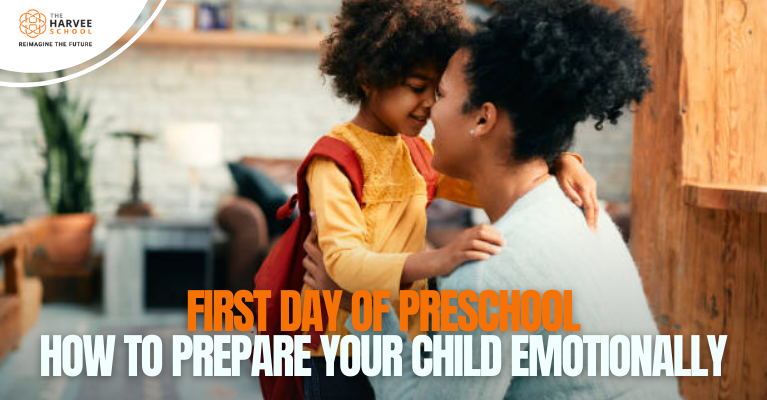
First Day of Preschool: How to Prepare Your Child Emotionally

By The Harvee School
The first day of preschool is an important milestone in a child’s life. For many children, it is their first experience being away from home and parents for a few hours. While this step is exciting, it can also bring fear, anxiety, and uncertainty.
Emotional preparation plays a key role in helping children adjust smoothly. When children feel secure and confident, they are more likely to enjoy their preschool experience and adapt quickly.
This guide will help parents understand how to prepare their child emotionally for the first day of preschool in a simple and practical way.
Why Emotional Preparation is Important
Children are naturally attached to their parents and familiar environments. A sudden change, such as starting preschool, can feel overwhelming.
Emotional preparation helps children:
- Feel safe in a new environment
- Build confidence
- Reduce separation anxiety
- Develop independence
When children are emotionally ready, their learning and social development also improve.
Talk About Preschool in Advance
Start introducing the idea of preschool a few days or weeks before the first day.
Explain clearly:
- What preschool is
- What happens there
- Who they will meet
Keep your explanation simple and positive. For example, you can tell your child that preschool is a place where they can play, learn, and make friends.
This reduces fear of the unknown and builds curiosity.
Acknowledge Your Child’s Feelings
It is common for children to feel nervous or scared.
Instead of dismissing their emotions, acknowledge them. Let your child know that it is okay to feel worried.
Simple statements like the following can help:
- “It’s okay to feel a little scared.”
- “I understand you might miss me.”
When children feel understood, they become more emotionally secure.
Create a Familiar Routine
Children feel comfortable when they follow a routine.
Before preschool starts:
- Set regular sleep timings
- Practice waking up early
- Follow a simple morning routine
A consistent routine helps children feel more in control and reduces anxiety on the first day.
Practice Short Separations
Separation from parents is one of the biggest challenges on the first day.
To prepare your child:
- Leave them with a trusted family member for short periods
- Gradually increase the time
- Always return as promised
This helps children understand that separation is temporary and safe.
Visit the Preschool Before the First Day
If possible, take your child to the preschool before their first day.
Let them:
- See the classroom
- Meet the teacher
- Explore the surroundings
Familiarity with the environment reduces fear and makes the first day easier.
Encourage Independence
Helping your child become independent builds confidence.
Encourage simple activities such as:
- Eating on their own
- Wearing shoes
- Packing their bag
These small steps make children feel capable and prepared for preschool.
Keep Goodbyes Short and Clear
On the first day, avoid long and emotional goodbyes.
Instead:
- Give a hug
- Say a simple goodbye
- Reassure them that you will return
For example: “I will pick you up soon. Have a good time.”
Leaving calmly and confidently helps children settle faster.
Stay Calm and Positive
Children observe and react to their parents’ emotions.
If you appear anxious, your child may also feel nervous.
Maintain a calm and positive attitude. Speak with confidence and encouragement. This helps your child feel safe and reassured.
Allow a Comfort Item
Giving your child a small comfort item can help them feel secure.
This could be:
- A small toy
- A handkerchief
- A family photo
Such items provide emotional support during the initial adjustment period.
Support Your Child After School
The first few days may be challenging. Some children may cry or feel uncomfortable, which is completely normal.
After school:
- Talk to your child calmly
- Ask simple questions
- Listen without pressure
Avoid overwhelming them with too many questions. Give them time to adjust.
Work Together with Teachers
Teachers play an important role in your child’s emotional development.
Share useful information such as:
- Your child’s habits
- Preferences
- Any fears or concerns
This helps teachers provide better support and care.
Final Thoughts
The first day of preschool is a significant step in a child’s emotional and social development. While it may come with challenges, proper preparation can make the transition smooth and positive.
Every child adjusts at their own pace. Some may feel comfortable quickly, while others may take time. Both are normal.
With patience, consistency, and encouragement, children gradually build confidence and begin to enjoy their preschool journey.
A strong emotional start lays the foundation for better learning, social skills, and overall development in the years ahead.