


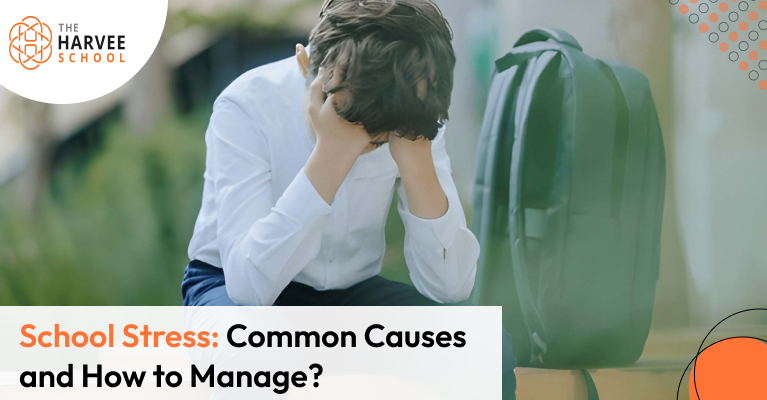
School Stress: Common Causes and How to Manage?

By The Harvee School
School is meant to be a place of learning, curiosity, and growth. But in some cases, for many children today, it can also become a source of stress.
Academic expectations, structured routines, social pressures, and packed schedules can quietly overwhelm young minds. Sometimes parents or teachers won’t realize it immediately.
School stress is no longer limited to board exam years. Even preschoolers and primary school children can experience stress related to school environments.
What is School Stress?
School stress refers to the emotional, mental, or physical strain children experience due to school-related expectations. While a small amount of stress can motivate learning, excessive or prolonged stress can negatively affect a child’s development.
It is important to distinguish between:
- Healthy stress, which encourages effort and growth
- Unhealthy stress, which causes anxiety, fear, or withdrawal
Children often lack the language to express stress clearly, which makes adult awareness essential.
Common Causes of School Stress in Children
Academic Pressure and Performance Expectations
In many Indian households, academics are closely tied to future success. Tests, grades, homework, and comparisons; whether intentional or subtle can make children feel constant pressure to perform. Even young learners may fear disappointing parents or teachers.
Transitions and Changes in Routine
Starting school, moving to a new class, changing teachers, or adjusting to a fixed daily schedule can be overwhelming for some kids. Children thrive on predictability, and sudden changes can create anxiety, especially in early years.
Social Challenges at School
Friendships, peer acceptance, and classroom interactions are significant stress factors. Difficulty fitting in, fear of being left out, or experiences of teasing or bullying can deeply affect a child’s sense of safety at school.
Fear of Failure or Discipline
Strict correction methods, public criticism, or fear-based discipline can make children associate learning with anxiety. Over time, this fear may reduce participation, curiosity, and confidence.
Overscheduled Days
Between school, tuition classes, extracurricular activities, and homework, many children have little time to rest or play. Constant activity without downtime can lead to emotional and physical exhaustion which relatively causes academic burnout in students.
Signs and Symptoms of School Stress
School stress often shows up in indirect ways. Parents and educators should look for patterns rather than isolated incidents.
Emotional signs
- Irritability, mood swings, or frequent crying
- Withdrawal from family or friends
Physical signs
- Headaches or stomach aches without medical cause
- Changes in appetite or sleep patterns
Behavioral signs
- Avoiding school or frequent complaints about going to class
- Sudden loss of interest in activities they once enjoyed
Academic signs
- Difficulty concentrating
- Drop in participation or performance
How school stress affects a child’s development?
If left unaddressed, school stress can impact:
- Learning ability and memory
- Self-esteem and confidence
- Social skills and emotional regulation
Chronic stress during early years may also affect how children handle challenges later in life. Supporting emotional well-being is not separate from education; it is foundational to it.
How can parents help manage school stress?
Create a Safe Space for Communication
Encourage children to talk about their day without fear of judgment or immediate correction. Simple, open-ended questions help children feel heard and understood.
Maintain Predictable Routines
Consistent sleep times, meals, and homework schedules create a sense of security. A stable routine helps reduce anxiety and improves focus.
Focus on Effort, Not Just Results
Recognize hard work, improvement, and persistence rather than only marks or outcomes. This builds resilience and a healthy attitude toward learning.
Allow Adequate Downtime
Unstructured play, creative activities, and rest are essential. Downtime helps children process emotions and recharge mentally.
How can schools support stress-free learning?
Schools play a vital role in shaping a child’s emotional experience.
- Creating emotionally safe classrooms
- Using positive reinforcement instead of fear-based discipline
- Encouraging participation without pressure
- Training teachers to recognize early signs of stress
When schools prioritize emotional well-being alongside academics, children are more engaged and confident learners.
When should parents seek professional support?
Parents should consider additional support if:
- Stress symptoms persist over weeks
- The child shows extreme fear, withdrawal, or school refusal
- Physical symptoms interfere with daily life
Early guidance from school counselors or child specialists can prevent long-term challenges.
How harvee school supports emotional well-being?
At Harvee School, education goes beyond academics. Equal emphasis is placed on emotional safety, confidence-building, and holistic development. Classrooms are designed to encourage curiosity, expression, and collaboration.
Teachers are trained to observe not just academic progress, but emotional cues, ensuring every child feels supported, valued, and understood.
The goal is to nurture learners who are confident, resilient, and joyful in their learning journey.
Conclusion
School stress is a reality for many children but it is manageable. When parents and schools work together to recognize early signs, reduce unnecessary pressure, and provide emotional support, children are better equipped to learn, grow, and thrive.
A balanced approach to education; one that values emotional well-being as much as academic success can lay the foundation for confident, capable, and happy learners.
Frequently Asked Questions
Yes. Mild stress is common, but persistent or intense stress needs attention.
Yes. Stress can cause headaches, stomach issues, sleep problems, and fatigue.
When pressure causes fear, avoidance, or emotional distress, it may be excessive.
Teachers help by creating safe environments, offering encouragement, and understanding individual learning needs.
Open communication, shared observations, and consistent support strategies benefit the child most.