


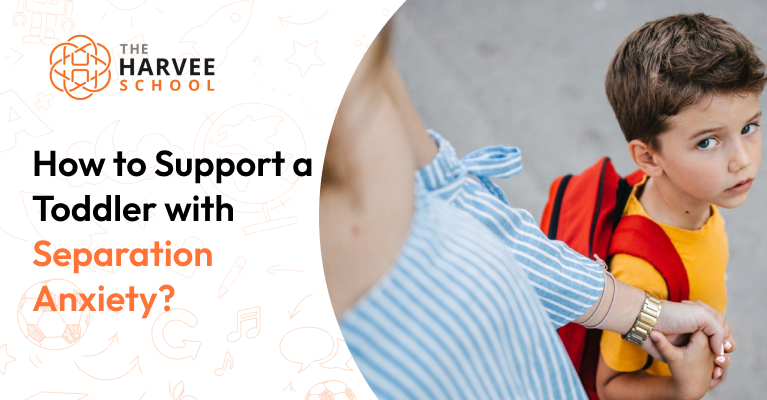
How to Support a Toddler with Separation Anxiety: School -Ready Guide

By The Harvee School
Key Facts
- Separation anxiety is a healthy and temporary phase in toddlerhood.
- Short, confident goodbyes help children settle faster.
- Consistency between home and school routines builds security.
- Toddlers adapt beautifully when parents and teachers work together.
For many parents, the first few days of preschool bring a mix of excitement and worry. One of the most common concerns every parent will have is: “Why does my child cry when I leave?” or “Is this normal?”
Yes, it is completely normal.
Separation anxiety is a healthy developmental phase that shows your toddler has built a secure bond with you. Understanding this behavior and responding with patience can make the transition smoother for both you and your child.
This guide will help you understand why separation anxiety happens, how long it lasts, and what simple strategies can help toddlers feel safe and confident.
What is separation anxiety?
Separation anxiety is the emotional distress toddlers feel when they are away from their parents or primary caregivers. It typically appears between 8 months to 3 years, and may peak during major transitions like starting preschool.
It is not misbehavior; it’s a way of saying: “I need reassurance that you’ll come back.”
At Harvee School, we see this often during the first few weeks, and with the right support, children settle beautifully.
Why does separation anxiety happen?
Here are the key reasons toddlers experience separation anxiety:
- Growing awareness: Toddlers begin to understand that people and objects exist even when out of sight. This also means they realise when you’re not around.
- Strong attachment: Separation anxiety reflects a secure connection with caregivers.
- New environments: Starting preschool, meeting new people, or shifting routines can heighten anxiety.
- Fear of the unknown: Toddlers thrive on predictability. New surroundings can feel overwhelming at first.
- Developmental leap: Emotional, cognitive, and language developments during this age can intensify clinginess.
Every child handles transitions differently, so their reactions vary.
Common signs of separation anxiety in toddlers
Parents may notice one or more of these signs:
- Crying or clinging during drop-off
- Refusing to go to school or daycare
- Following parents everywhere
- Trouble sleeping alone
- Waking up at night and seeking comfort
- Worrying when parents are out of sight
- Temporary loss of appetite during transition phases
These signs are completely normal during early years.
How long does separation anxiety last?
It depends on the child.
For many toddlers, it eases within 1–4 weeks of starting school. For others, it may appear in phases, especially during:
- Growth spurts
- Illness
- Routine changes
- Returning to school after holidays
Consistency and reassurance make a huge difference.
How we support children at Harvee?
At Harvee School, separation anxiety is handled with gentle strategies that help children feel safe and welcomed:
- Slow and smooth settling-in sessions
- Warm teacher-child bonding routines
- Comfort corners and sensory activities
- Predictable classroom routines
- Encouraging independence through play
- Regular communication with parents
Our teachers are trained to comfort anxious children and help them build trust in their new environment.
Tips for Parents to Ease Separation Anxiety
You can support your toddler at home with simple, practical steps:
1. Create a predictable goodbye routine
A hug, a kiss, a short phrase like “I’ll be back after playtime” helps build trust.
2. Keep drop-offs short
Long, emotional goodbyes make it harder for toddlers to settle.
3. Stay calm and confident
Children sense your feelings; when you look assured, they feel safe.
4. Bring a comfort object
A small toy or familiar item helps ease the transition.
5. Practice small separations at home
Playing in another room or spending time with trusted relatives builds independence.
6. Stay consistent
Regular attendance helps children adapt faster.
7. Celebrate small wins
Clapping, praising, or talking about their day boosts confidence.
When should parents be concerned?
Most cases of separation anxiety are completely normal. However, consider seeking guidance if:
- Anxiety persists beyond several months
- Toddler experiences extreme panic during drop-offs
- There is refusal to sleep or eat for long periods
- Anxiety interferes with daily activities
- Toddler shows signs of fear even at home
These situations are rare but worth discussing with a child-development expert if they worry you.
Final Thoughts
Separation anxiety can feel overwhelming for both parents and children, but with gentle guidance, patience, and consistent routines, toddlers learn to feel secure even when away from family.
At Harvee School, we partner closely with parents to make this transition smooth, warm, and reassuring, helping every child step into school with confidence and joy.
If you’d like to explore our early-years programs or understand how we support emotional development, we’re always here to help.
Frequently Asked Questions
Most toddlers begin showing signs around 8–18 months and may experience it again during preschool years due to new routines and environments.
Not at all. It actually shows that your child has formed a healthy emotional bond with you. With consistent support, it naturally fades.
Typically 1–4 weeks, depending on the child’s temperament, past experiences, and the settling-in approach at school.
Trained teachers comfort the child, redirect them to engaging activities, and build trust through warmth, conversation, and routine.
Stay calm, keep the goodbye short, offer reassurance, and speak to the class teacher. A collaborative approach helps children settle faster.