

30 Gross Motor Skills Activities for Preschoolers

By The Harvee School
Gross motor skills are the foundation of a child’s physical development. They involve the use of large muscle groups that help children sit, stand, walk, run, jump, and maintain balance.
During the preschool years (ages 3–5), strengthening these skills is essential, not just for physical health, but also for learning, confidence, and classroom readiness.
The good news?
Preschoolers don’t need structured workouts. Play itself is the best teacher.
Below are 30 simple, effective gross motor skills activities that parents and schools can easily include at home or in classrooms.
What are gross motor skills?
Gross motor skills involve movements of the arms, legs, and core muscles. These skills help children:
- Maintain posture and balance
- Coordinate body movements
- Develop stamina and strength
- Prepare for fine motor tasks like writing
Strong gross motor development supports attention, emotional regulation, and independence.
Why are gross motor activities important for preschoolers?
During early childhood, the brain and body develop together. Movement-based play:
- Improves balance and coordination
- Builds muscle strength and bone health
- Enhances focus and classroom behaviour
- Encourages social interaction and teamwork
- Reduces excess screen dependency
For Indian children, especially those living in apartments or urban settings, intentional movement play is crucial.
30 Gross Motor Skills Activities for Preschoolers
Jumping & Hopping Activities
- Jump over lines drawn with chalk
- Hop on one foot, then switch
- Jumping jacks
- Frog jumps
- Jump in and out of circles
Running & Movement Games
- Running races (short distance)
- Tag games
- Follow-the-leader
- Zig-zag running between objects
- Relay races
Climbing & Crawling Activities
- Crawling under tables or chairs
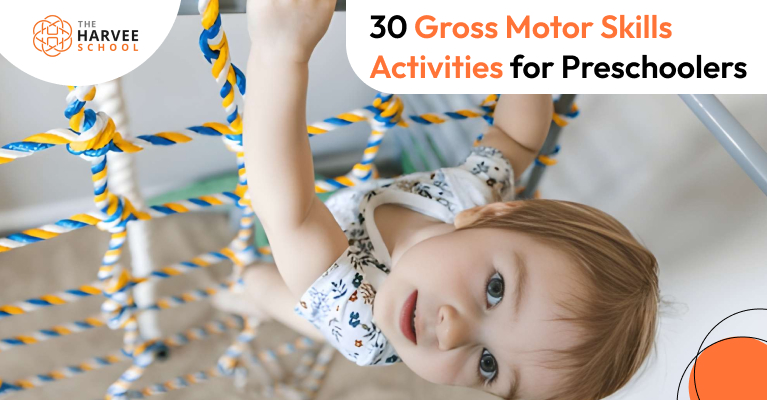
- Climbing playground equipment
- Pillow or cushion climbing
- Tunnel crawl
- Monkey bar play (with supervision)
Balance Activities
- Walk on a straight line (tape or chalk)
- Stand on one leg
- Balance a book on the head
- Heel-to-toe walking
- Balance beam play
Throwing, Catching & Kicking
- Throw and catch a soft ball
- Roll a ball back and forth
- Kick a stationary ball
- Aim-and-throw games (buckets or baskets)
- Balloon volleyball
Music & Creative Movement
- Freeze dance
- Action rhymes (Head, Shoulders, Knees & Toes)
- Animal walks (bear, crab, frog)
- Yoga poses for kids (tree, mountain)
- Marching to music
Indoor Gross Motor Activities
- Balloon games
- Marching and stretching
- Kids yoga
- Crawling races
- Dance-based movement
These are especially useful during hot summers or rainy seasons.
Outdoor Gross Motor Activities
- Cycling
- Playground free play
- Running and chasing games
- Football or kickball
- Nature walks
Outdoor play boosts vitamin D, immunity, and emotional well-being.
What’s normal vs when to check further?
Every child develops at their own pace. However, consider consulting a pediatrician or educator if a preschooler:
- Avoids physical activity consistently
- Has frequent falls or poor balance
- Cannot run, jump, or climb at all
- Shows extreme fear of movement
Early guidance can make a big difference.
How can parents and schools support gross motor development?
- Encourage daily free play
- Limit screen time
- Avoid overcorrecting movements
- Focus on effort, not perfection
- Create safe spaces to move
In schools, structured outdoor playtime is just as important as academics.
Conclusion
Gross motor skills form the backbone of a child’s physical, emotional, and cognitive growth.
Following these simple movement-based activities every day, parents and educators can help preschoolers build strength, confidence, and lifelong healthy habits.
Remember—active children learn better, feel better, and grow stronger.
Frequently Asked Questions
Gross motor skills involve large muscle movements such as running, jumping, climbing, and balancing. They help children move confidently and safely.
Gross motor skills develop rapidly between ages 2 and 5, making preschool years a critical period.
Preschoolers should ideally have at least 60 minutes of active play every day.
Yes. Activities like dancing, yoga, balloon games, and crawling are excellent indoor options.
Strong gross motor skills improve posture, attention span, coordination, and readiness for classroom tasks like writing and sitting for longer periods.